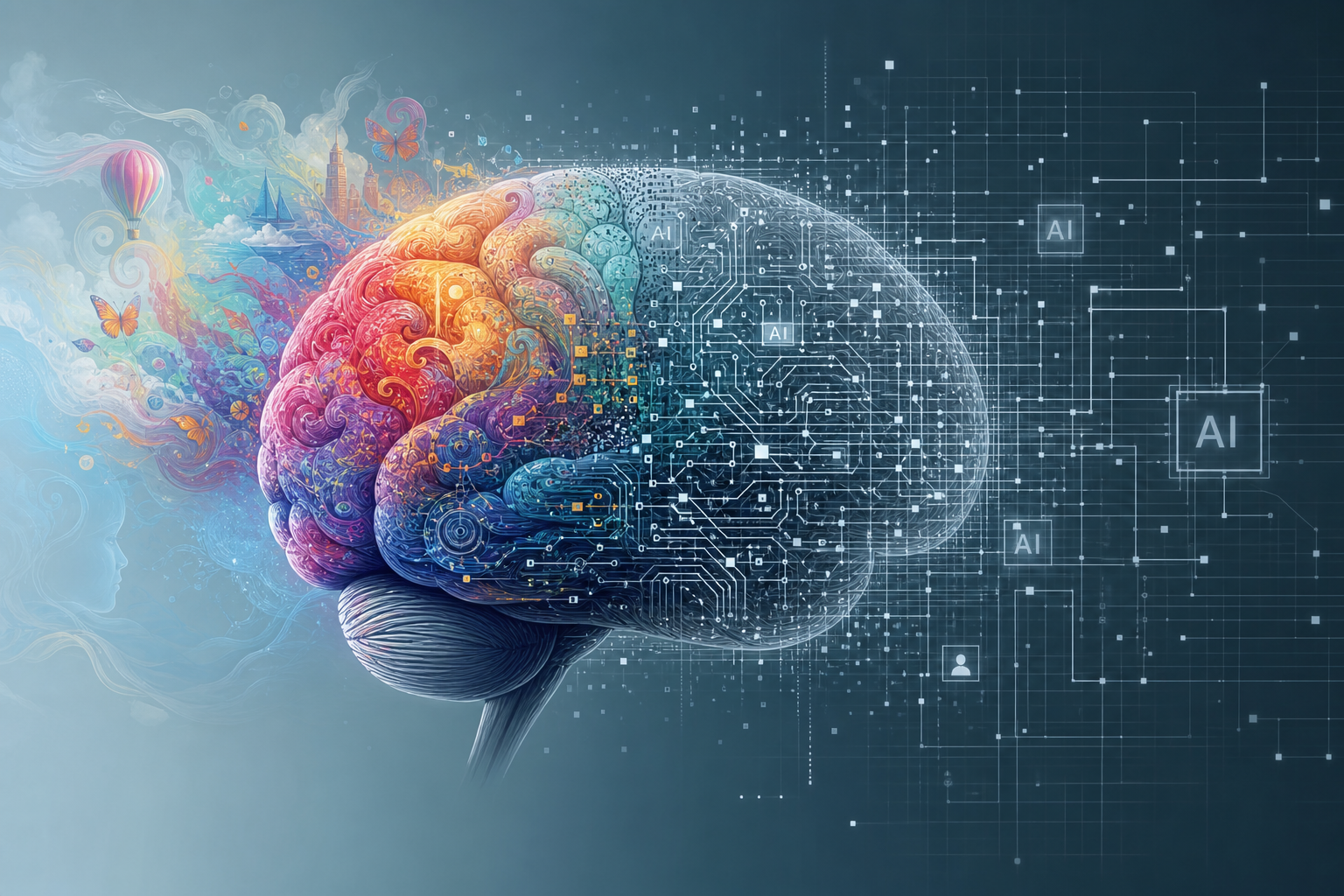
In a world increasingly dominated by artificial intelligence, some speculate whether our dreams might start to lose their unique flair. As AI-generated content becomes more ubiquitous, there's a concern that our individual expressions and dreams could begin to homogenize. This touches on the very essence of what makes us human: our creativity and capacity for original thought.
The Rise of AI in Creative Spaces
Artificial intelligence has infiltrated various creative realms, from painting to music composition, and even literature. Tools like OpenAI's ChatGPT and DALL-E are not just novelties; they are reshaping how we create and consume art. This raises an important question: will AI's influence lead to a convergence in our creative outputs?
While there is no definitive evidence yet, some experts suggest that as AI systems learn from vast datasets, they often replicate patterns and styles that are popular or deemed successful. This could potentially sideline the more obscure, avant-garde forms of creativity that thrive on uniqueness and individual perspective. If our dreams and creative visions begin to reflect AI's patterns, are we at risk of losing our personal signatures in our expressions? This remains a speculative concern but one that warrants attention.
Homogenization of Experience
The potential for AI to standardize our creative outputs extends beyond merely producing art. It enters into how we interpret and value our dreams. Dreams have long been a canvas for our subconscious to express its deepest thoughts and desires. They are intensely personal, often influenced by our unique experiences and emotions.
Yet, if AI-generated content continues to become more prevalent in our daily lives, there's a hypothetical scenario where our dreams could start to mirror this content. Imagine a future where everyone's dreams are tinged with the same AI-generated motifs and narratives. Although this is speculative and lacks empirical evidence, it raises concerns about the richness of human imagination being diluted, leading to a loss of diversity in our personal experiences.
Balancing Inspiration with Individuality
It's not all doom and gloom. AI can serve as a powerful tool for inspiration. By providing new perspectives and ideas, it can spark creativity and innovation. Writers facing a creative block might find AI-generated prompts a useful springboard. Artists might use AI to explore color palettes and compositions they hadn't considered.
However, preserving the diversity of human imagination requires a conscious effort to balance AI's influence with our own creative instincts. We must ensure that AI serves as a collaborator rather than a dictator of style. This means actively seeking out and nurturing our unique perspectives, even as we embrace technological advancements.
The Human Element in a Digital Age
The beauty of human creativity lies in its unpredictability and its ability to surprise. While AI can mimic creativity, it does not experience the world. It lacks the emotional depth and personal history that inform our dreams and expressions. This is where human creativity holds its ground: in the ability to transcend algorithms and create something genuinely new.
As we navigate this digital age, we should celebrate the tools that AI provides, but also fiercely protect the individuality that defines us. Each dream is a testament to our personal journey, a narrative only we can tell. The challenge is to ensure that, as AI evolves, it enhances rather than diminishes the richness of our dreams.
In the end, the question isn't whether AI will make our dreams all look the same. It's whether we can harness AI's potential to enrich our dreams without losing sight of what makes them uniquely ours. How do you envision your dreams in a world touched by AI?