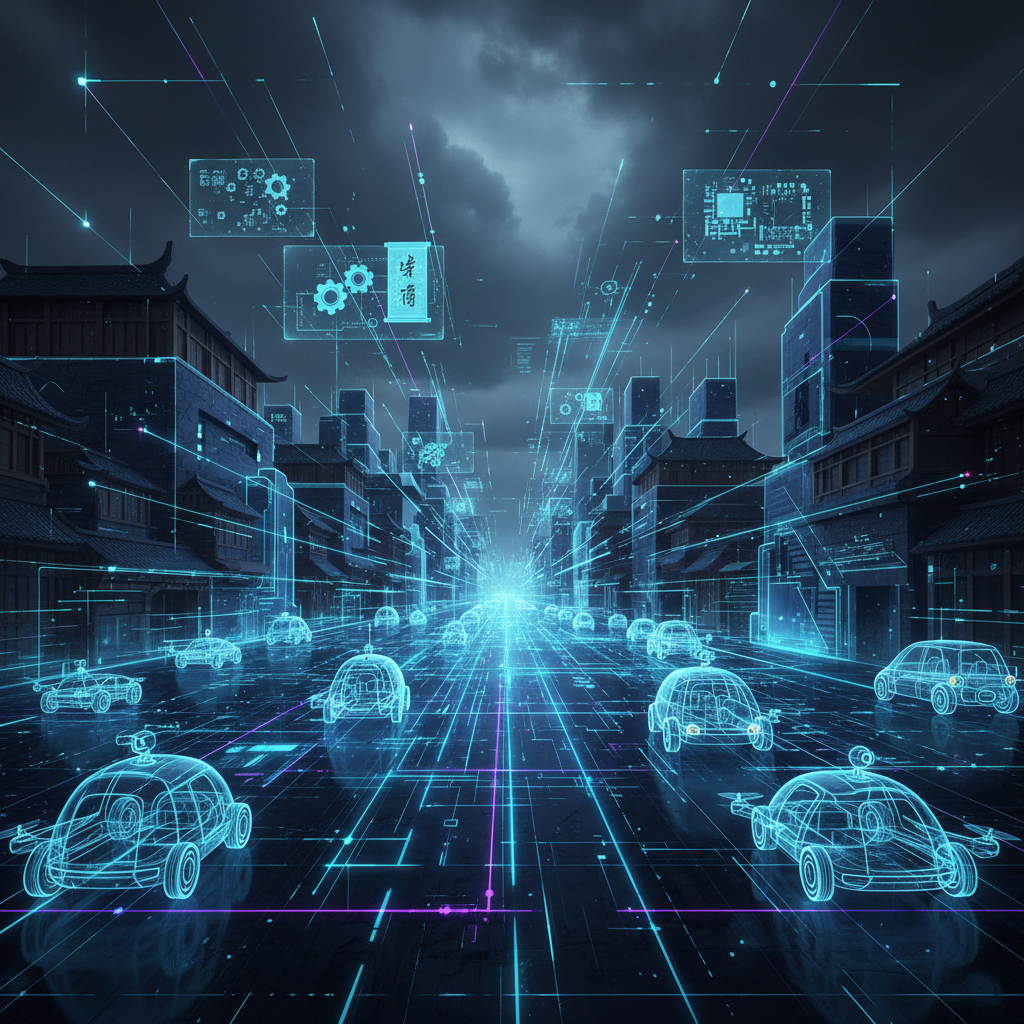
In the bustling metropolis of San Francisco, where technology and tradition intersect at every corner, a recent blackout provided an unexpected stage for a real-world test of autonomous vehicle technology. Amidst the city's temporarily darkened streets, Waymo's robotaxis faced a challenge that highlighted both the potential and the limitations of our self-driving future.
The Unexpected Test: Navigating Without Traffic Signals
The blackout in San Francisco was more than just an inconvenience for residents; it was a formidable test for Waymo's fleet of autonomous vehicles. Without power, the traffic signals—key navigational aids for any vehicle—were out of commission, leaving the robotaxis to rely solely on their onboard systems to interpret the road and navigate safely.
Waymo's response to this challenge was not only an exercise in crisis management but also a revelation about the current state of autonomous driving technology. The company reported that its vehicles successfully navigated over 7,000 dark stoplights on the day of the blackout. This feat underscores the resilience and adaptability of the robotaxis in adverse conditions, showcasing their ability to operate under unexpected circumstances.
The Resilience of Autonomous Technology
What makes this achievement noteworthy is the complexity involved in navigating urban environments without the guidance of traffic signals. Autonomous vehicles must interpret a multitude of data points—from road markings to the behavior of other vehicles and pedestrians—in real-time. The blackout forced Waymo's robotaxis to depend entirely on their sensors and algorithms, pushing the boundaries of what these systems can achieve.
This situation highlights two critical aspects of autonomous vehicle technology:
-
Redundancy and Robustness: The ability of Waymo's robotaxis to operate without traffic signals points to the importance of robust and redundant systems. These vehicles are equipped with a suite of sensors, including LIDAR, cameras, and radar, working in concert to ensure safe navigation even when external conditions are less than ideal.
-
Machine Learning and Adaptability: The successful navigation of over 7,000 dark stoplights is a testament to the sophisticated machine learning algorithms that process vast amounts of data to make split-second decisions. These algorithms are continually learning and improving, adapting to new challenges as they arise.
Challenges and Opportunities in Autonomous Navigation
While the success of Waymo's robotaxis during the blackout is encouraging, it also sheds light on the challenges that remain in the realm of autonomous driving. Navigating without traffic signals is just one of many scenarios that autonomous vehicles must be prepared to handle. Other challenges include inclement weather, unpredictable human behavior, and complex road layouts.
Moreover, the incident raises important questions about the infrastructure needed to support autonomous vehicles. As cities evolve to accommodate this technology, there will be a need for smarter infrastructure that can communicate directly with vehicles to provide real-time updates and guidance, even in situations where traditional traffic control systems fail.
Reflecting on the Future of Autonomous Vehicles
The San Francisco blackout served as an unplanned yet valuable test for Waymo's robotaxis, and the results offer a glimpse into the future of transportation. As we reflect on this event, several questions come to mind: How can cities better prepare for integrating autonomous vehicles into their infrastructure? What additional innovations are necessary to ensure these vehicles can handle even more complex scenarios?
As we ponder these questions, it is clear that the journey towards fully autonomous transportation is as much about human ingenuity and adaptability as it is about technological advancement. The resilience demonstrated by Waymo's robotaxis during the blackout is a promising step forward, but it is just one part of a larger narrative about the future of mobility and the smart cities that will support it.
In the end, the true measure of success for autonomous vehicles will not just be their ability to navigate in the dark, but how they can illuminate a path towards safer, more efficient, and more inclusive transportation solutions for all. What steps will we, as a society, take to ensure that this bright future becomes a reality?